Pro Surface
Supply USA

PSS-RIP-14 · Blue gray flake blend

Riptide flake blend

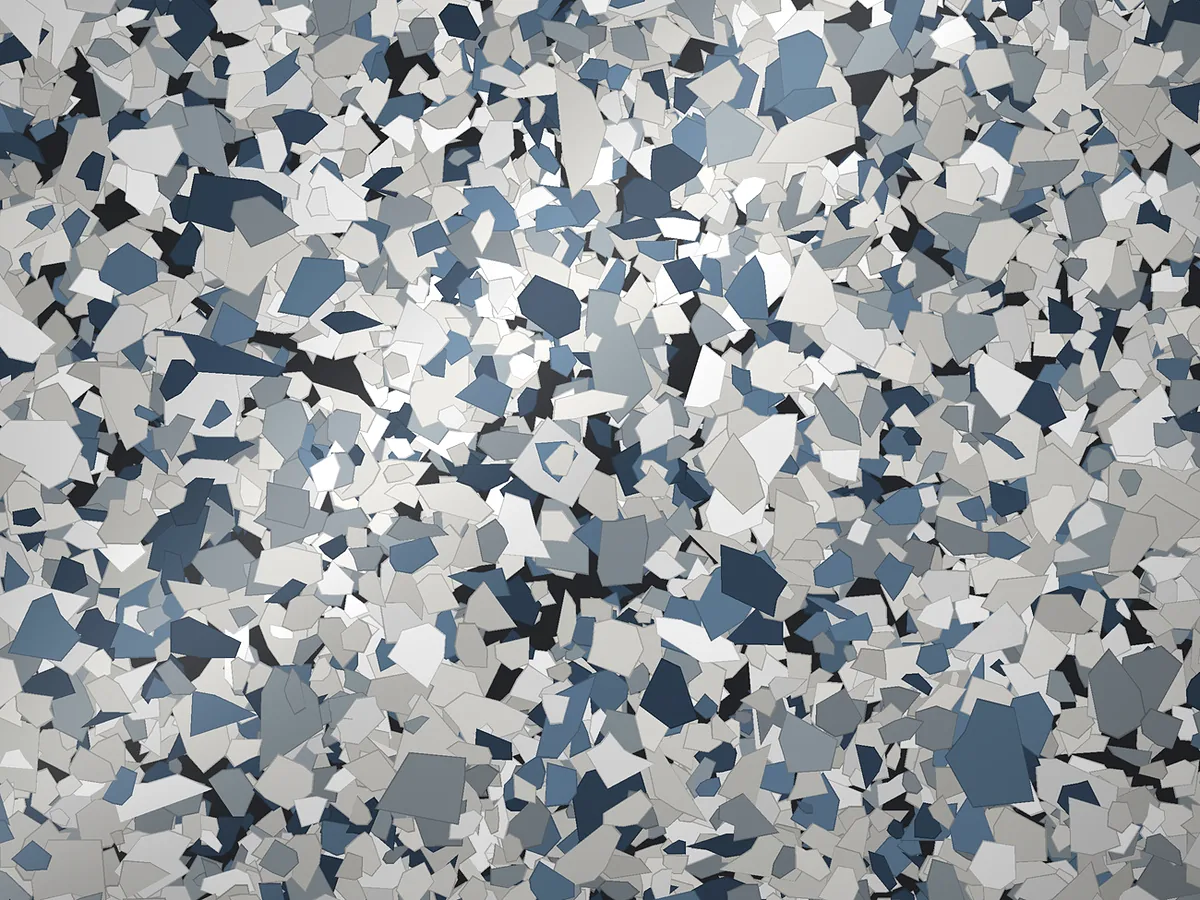
The only blue in our line: a light, cool floor of white, off-white and gray chips, with about one chip in five in slate blue or deep blue.

Price
$85per 44 lb box, before freight
Ready to ship
Nov 152026, for pre-orders
Full broadcast
220 to 310sq ft per box, typical

Nothing is charged online. Submit your pre-order from the cart, and Adam confirms freight.

Rendered swatch of Riptide flake colors: white, cool gray, off-white, warm white, slate blue, deep blue
Rendered swatch of the blend colors, not a photo

What is in Riptide?

Riptide is about 20% white, 20% cool gray, 20% off-white, 20% warm white, 10% slate blue and 10% deep blue chips.

  • White
  • Cool gray
  • Off-white
  • Warm white
  • Slate blue
  • Deep blue

Shares are approximate and are not a manufacturing specification. Compare physical chips on a test board before you match an existing floor.

Riptide specifications

Blend code
PSS-RIP-14
Chip size
1/4 in
Comparable in color to
Tidal Wave (Torginol)
Color family
Blue gray
Look
Light, cool whites and grays with slate blue
Package
44 lb box
Price
$85 per 44 lb box, before freight.
Full broadcast coverage
About 220 to 310 sq ft per box (typical for 1/4 in chips)
Heavy partial broadcast
About 1,100 to 2,200 sq ft per box
Flake cost, full broadcast
About $0.27 to $0.39 per sq ft
Systems
Epoxy and polyaspartic floor coatings (base coat, broadcast and topcoat guide)
Availability
Pre-orders open now online. Grand opening Monday, November 9, 2026. Ready to ship November 15, 2026.
Ships from
Spokane Valley, WA to anywhere in the U.S. (how freight is quoted)

We list the reference only so you can match a color. Pro Surface Supply USA is not sponsored or endorsed by Torginol.

Coverage figures are typical ranges from published manufacturer guidance, not guarantees. Actual use depends on broadcast technique, base coat thickness and the coating system. Always follow your resin manufacturer's system guide. Use the flake calculator to size a job.

How much blue does Riptide show?

Enough to set the tone, not enough to make it a blue floor. Standing on it, you see a light, cool gray-white floor with a clear blue cast. The blues are about one chip in five: they cool the whole field without taking it over.

Up close you see two distinct blues: a mid slate blue and a much deeper blue, about 10% each. The deep blue is the darkest chip in the blend. There is no black, so the contrast is softer than in a black-speckled blend, and the warm white chip keeps the light tones from reading icy.

Where Riptide works

Pick Riptide when the customer wants color without going bold. It suits interiors with a cool palette: gray or blue cabinets, white walls, chrome and stainless, a home gym, a workshop where the owner is tired of gray, or a business whose brand color is blue.

Riptide and Canyon use the same three light colors (white, off-white and warm white, about 60% of each blend). The other 40% or so is what separates them: Riptide adds cool gray and two blues, Canyon adds taupe, warm gray, black and chocolate. If a customer likes Canyon's lightness but wants it cool, show Riptide.

Sun, UV and topcoat

Keep Riptide out of direct sun where you can, and put a UV-stable (aliphatic) topcoat over it. Bold colors such as these blues can fade early in direct sun, and we have no lightfastness test data for our own chips, so we do not call Riptide UV stable.

An interior garage, basement, gym or shop is a good fit. A garage whose door sits open to afternoon sun, a sunroom or a patio is a poor one. The topcoat matters for the resin too. Standard epoxy has poor UV resistance, and even UV-resistant epoxy can show yellowing on light gray and white floors. On a cool blue-white floor any amber shift is easy to see, so finish with an aliphatic topcoat (aliphatic polyaspartics have a low yellowing tendency) per your resin maker's system guide. The flake guide covers topcoats and UV in more depth.

Dirt and lighting

Riptide hides gray dust, concrete dust and dried road salt. It shows tan mud, rust, oil and black tire marks, because there is no black or brown in the blend to hide them.

Under daylight-color LEDs the blues look crisp and the floor reads blue-gray. Under warm bulbs the whites turn creamy and the blues read darker and grayer. If the customer is choosing for the blue, show chips under the room's real lights.

What base coat goes under Riptide?

Tint the base coat light to medium gray, close to the cool gray chip. Thin spots happen on a single broadcast, and a base in one of the blend's own colors keeps them from reading as flaws.

A gray base turns any thin spot into what looks like one more gray chip. A blue base would push extra blue through wherever coverage is light.

Matching an existing floor

Riptide is comparable in color to Tidal Wave (Torginol). Blue is the color a customer notices first when a match is off, so broadcast a test board on your base coat and compare the blues in particular against the existing floor.

Ordering Riptide for a gym or showroom

A 600 sq ft home gym or showroom (20 x 30 ft) needs 3 boxes of Riptide for a full broadcast: $255 before freight.

Figured at 0.167 lb per sq ft (typical), this floor takes about 100 lb; at 0.20 (planning), 120 lb. Three boxes hold 132 lb, so you finish with 12 to 32 lb left over. Bid it that way: the flake you broadcast costs $0.27 to $0.39 per sq ft, but rounded up to whole boxes this floor carries $0.43 per sq ft in flake. Keep the leftover sealed and dry for the next Riptide job.

For a cool accent instead of a full floor of chips, a heavy partial broadcast of Riptide over a gray base uses far less: each box stretches across 1,100 to 2,200 sq ft or so. Run your numbers in the flake calculator.

Questions contractors ask

Is Riptide a blue floor?

It is a light gray-white floor with blue in it. White, off-white, warm white and cool gray make up about 80% of the chips, and slate blue and deep blue are roughly 10% each. From standing height it reads cool blue-gray, not solid blue.

Can Riptide go in a sunny garage or outdoors?

It is not our first pick for direct sun. Bold colors such as blue can fade early in strong sun, and we have no lightfastness test data for our own chips. If the floor will see regular sun, use a UV-stable (aliphatic) topcoat and tell the customer the blues may shift over time, or steer that floor away from blue.

What topcoat should go over Riptide?

A UV-stable aliphatic topcoat, such as an aliphatic polyaspartic, applied per your resin maker's system guide. Standard epoxy yellows in sunlight, and an amber shift is easy to spot on a cool blue-white floor. Broadcast to full coverage so no epoxy base is left showing.

Does Riptide have black in it?

No. The darkest chip is the deep blue, at about 10%. That keeps the contrast softer than a black-speckled blend, but it also means black tire marks and oil have no dark chip to hide against.

Which existing color is Riptide comparable to?

Tidal Wave (Torginol). We list the reference only so you can match a color. Pro Surface Supply USA is not sponsored or endorsed by Torginol. A mismatch shows in the blues first, so put Riptide on a test board next to the existing floor before you match it.

How many boxes of Riptide do I need for a 600 sq ft gym or showroom?

Three boxes ($255 before freight) for a full broadcast. A 600 sq ft floor needs about 100 lb at the typical rate and 120 lb at the planning rate, and three boxes hold 132 lb.

Grand opening Monday, November 9, 2026

Add Riptide to your pre-order

Pre-order now. Ready to ship November 15, 2026. Every blend is $85 per 44 lb box, before freight. Add boxes to your cart and submit your pre-order online; Adam reviews it, quotes freight and contacts you to confirm. Nothing is charged online.